
Burning Man is where big ideas take shape.
Beyond the unforgettable theme camps, mutant vehicles, sculptures, and wild expressions of personality, Black Rock City serves as a crucible for projects that emanate long after the last fire burns. Each year, entrepreneurs, innovators, artists, and disruptors participate in Burning Man everywhere, to return with dusty heads full of ideas, carrying home lessons of participation, cooperation, and radical creativity that can turn into inspiring business ventures. Their success shows that Burning Man isn’t just changing lives, it’s creating real world impacts for communities and industries around the globe.
You Learn to Always Have a Second and Third Plan
David Miles Jr. loves roller skating, and he loves Burning Man.
“I’m probably the luckiest person who never won a lottery because look what I get to do,” Miles says of his everyday professional endeavors. “I do the same thing as I do at the playa.”
For more than 20 years Miles has led the Black Rock Roller Disco, a Black Rock City camp that invites anyone to put on rollerskates and do some loops on his playa rink. Off-playa he runs the Church of 8 Wheels, an institution in San Francisco’s Lower Haight neighborhood that Miles… got rolling… 12 years ago. His work is an example of how Burning Man’s principles can lead to endeavors that have a positive impact in communities around the world.
“Roller skating is my entire life,” says Miles, who’s known as The Godfather of Skate. “ I met my wife skating in Golden Gate Park in June of ‘79. We’ve been together ever since.”

For Miles — who first arrived in Black Rock City 25 years ago — participating in Burning Man validated his instincts and gave him the courage to pursue a project that might have seemed unconventional: his business is a popular roller rink in a former church where anyone can put wheels and experience Black Rock Roller Disco year-round.
“Without Burning Man, I don’t think I would’ve felt that I could do this. Burning Man let me know I was on the right path, that I was right all along,” he says as he describes the reach and impact he’s had, creating joy inspired by his Burning Man experiences at festivals and in cities across the region. “I produce roller skating events for some of the largest music festivals in the world now. We’ve done Electric Daisy Carnival for five years. We’ve done Coachella. You name it, we’ve done it. We’ve turned downtown Reno into a roller rink!”
“Church of 8 Wheels provides a space for everyone, it’s very inclusive,” says Peter Martinez, a Church regular. Martinez met Miles during pandemic-era Friday night skates at Golden Gate Park that Miles hosted, and he has now camped twice in Black Rock City with the Black Rock Roller Disco. “People bring their kids, there’s regulars that are always there. It is a place of free expression and movement.”

The practical skills Miles acquired in Black Rock City — building structures, improvising solutions, and managing unforeseen weather, obstacles, and problems — translated directly into running his skating rink. “All this stuff I learned at Burning Man,” he says. “How to build a floor, how to fix things when they break, how to make magic out of chaos.”
Miles also emphasizes resilience and planning he’s learned on playa. “Burning Man taught me Radical Self-reliance. Every event I do now, if the power goes out I know I’ve got another generator. I’m ready,” he says.“When things go wrong— power cuts, equipment fails — I don’t panic. Burning Man prepared me for that. You learn to always have a second and third plan.”
“I never see him get flustered,” says Martinez. “He’s just very cool, and he’s got a lot of wisdom.”
Beyond these technical and operational lessons, Miles says Burning Man instilled in him a deeper philosophy of community. Following the particularly high-wind dust storm during the building of Black Rock City in 2025, Miles had work to do to get his camp back on track.
“People we didn’t even know came and helped,” he says. “And that kind of spirit, that’s what I bring into my business.”
“I think the Church is his way of bringing the playa to the city,” Martinez says. “He’s bringing that attitude of creativity and openness and community. It’s a little microcosm of Burning Man.”
“The Church of 8 Wheels exists because of everything I learned at Burning Man,” Miles says. “Community, creativity, resilience. That’s the whole business plan right there. I basically live the Burning Man life every day now, and I tell people — if you can do it at Burning Man, you can do it anywhere.”
It’s Not About the Ticket, but About Each Other, About the Gift
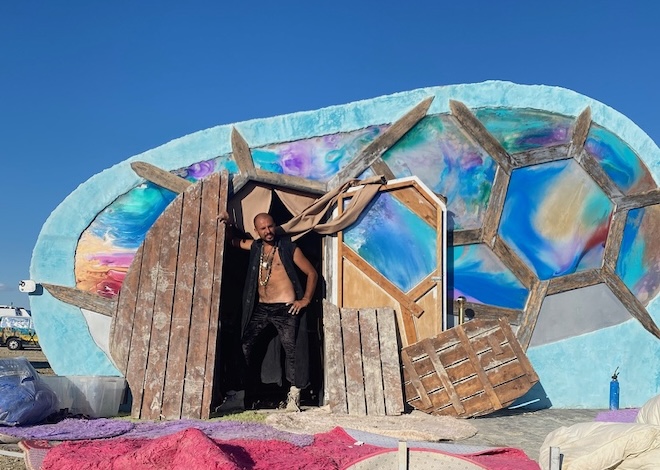
While Miles applies Burning Man lessons to radical recreation, others have drawn inspiration in more restful ways. Sasha Baybarin is the co-founder of the Steamology Institute, an international nonprofit exploring the benefits of steam healing in beautiful, intentional spaces. From humble beginnings in Black Rock City, they now have public steam practice hubs operating under the name Atmos in Portugal, Bali, and an invite-only location in Los Angeles where they teach, conduct research, and support conversations on steam healing culture. He saw Burning Man as a guide for a project that literally warms its community.
“I saw so many similarities in how we build Burning Man and how we build this steam space,” he says. “How participatory it is, how much it’s not about the ticket but about each other, about the gift.”
Baybarin made his first pilgrimage to Burning Man in 2015, joining a camp that built a large playa sculpture called “Our Way,” an “extremely difficult journey,” he says. From there, Baybarin says he was inspired by Black Rock City’s blend of ritual, creativity, and communal labor to translate an idea of building a banya — a Russian sauna and social space — into a physical place on playa that could nurture connection and well-being.
“The next year this team’s idea was declined by Placement. And I came to them and said, ‘Let’s make one more proposal to Placement that we’ll bring the banya. I will find a way, I will build, I’ll do everything.’ We sent it again, and Placement agreed,” Baybarin says. “So, we built the first banya — and the banya transformed basically all of this camp and all of this team. A lot of new people came, a lot of older people — it just brought a lot of inspiration.”
It was an idea that would not just change Baybarin’s camp in Black Rock City, but his own entire path.
“At Burning Man, I understood I wanted to put my life on the altar and do this all my life” he says. “I left with the banya in a trailer and started to build.” The Steamology Institute now hosts classes, runs a Steamology Festival, and runs a hub at Fly Ranch in Northern Nevada. Each location brings together a cohort of like-minded practitioners. To get involved, anyone curious is invited to reach out to their nearest hub, or browse Steamology Institute’s educational materials to start their own sauna or practice.
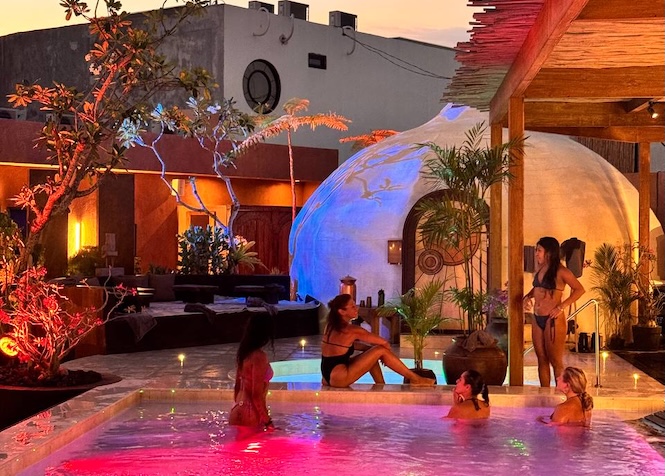
“The impact of Burning Man is major,” says Zoia Comarova, who manages a Steamology location. “Because that’s where Sasha felt a lot of response from the community. Burning Man helped shape this communal approach.”
The vision Baybarin carried from Burning Man was simple yet profound. “The steam room is a medicine for community,” he says. “It’s never just about sweating, it’s about what happens with the group, their sincerity, their connection, their friendship.”
“Steamology is a creative ritual, incorporating music — we’re singing, it’s a beautiful vocal space — and the space itself is beautiful,” says Comarova. “That’s a big Burning Man inspiration. I would credit Burning Man with instilling art and aesthetics into this steam space.”
But Burning Man, Baybarin says, also nurtures a type of creativity that goes beyond aesthetics. “Burning Man showed me that real creativity is a deep search for answers, a deep willingness to share unspoken knowledge,” he says. “We build spaces that make life a little warmer, a little easier.”
You Don’t Need to Know Someone to Cooperate with Them
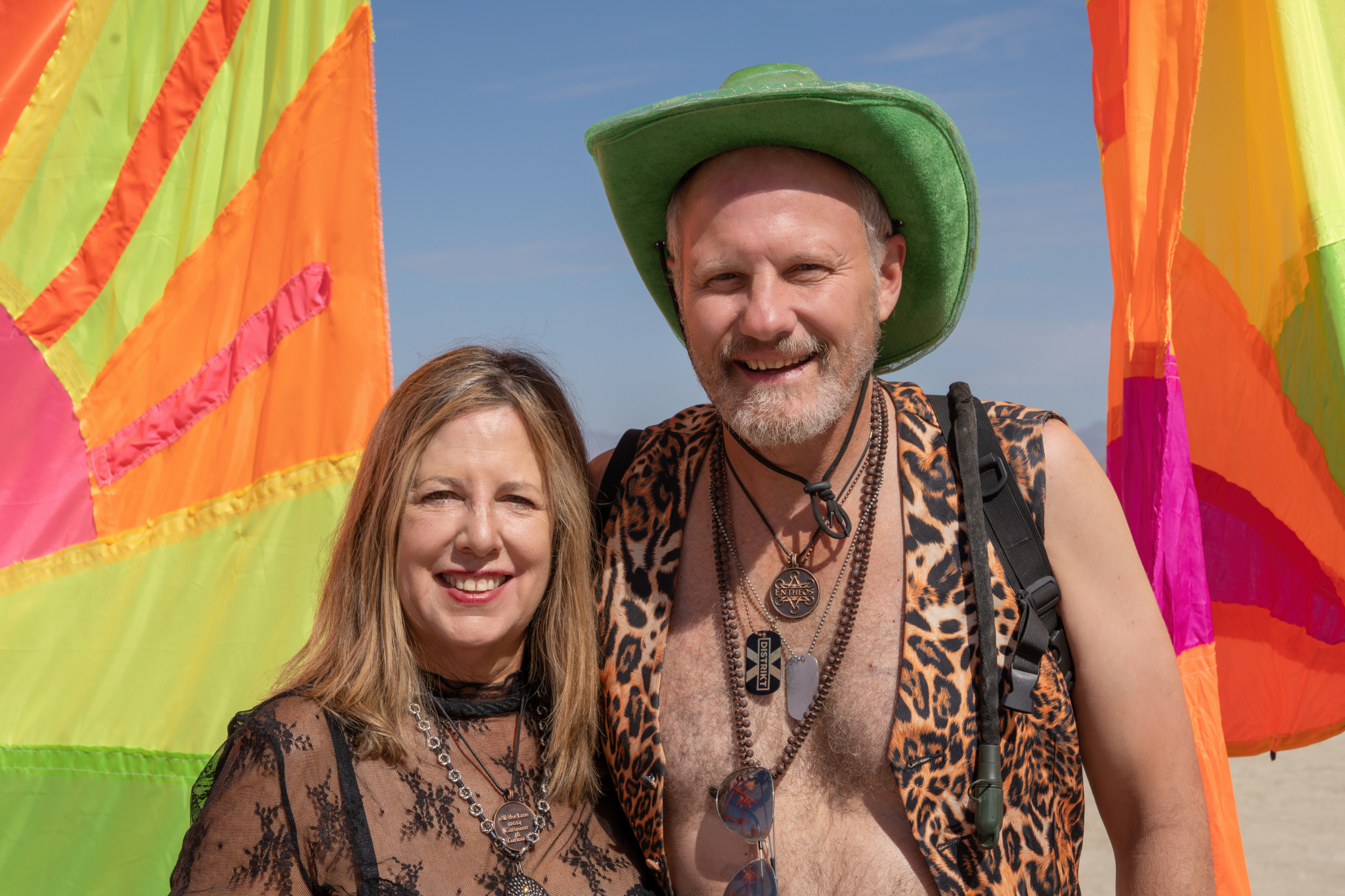
But Burning Man’s impact off-playa isn’t all roller skates and saunas. For Russell Jones, the founder and CEO of Private Fleet Net Zero (PFNZ), Burning Man was the blueprint for a tech business that marries sustainability with logistics.
“I see many parallels between Private Fleet Net Zero and Burning Man,” Jones says. “Our whole purpose at Private Fleet Net Zero is to bring people together who didn’t think they could or would work together, and to do it for a great cause. That’s what Burning Man does.”
PFNZ uses technology to optimize private fleet trucking operations and eliminate empty trucks on the road. See, when large private fleet trucks deliver cargo from one place to another, they are more often than not returning home with nothing inside. A waste. PFNZ reduces the number of trucks on the road by linking cargo that needs hauling with empty private fleet trucks already on their way.
Kyle Nashert, who works for PFNZ as Director of Carrier Sales, underscores the ethos behind Jones’ business strategy. “What Russ has done is make it free and easy for the private fleets to fill their backhauls. We’re helping truckers generate more revenue by connecting them with loads, and helping lessen the environmental impact. These trucks spew out so much pollution. Leaving No Trace is what we’re doing.”
Jones has been coming to Burning Man for most of the last 25 years. It’s where he came to celebrate after selling his first company, and it’s where he met his now-wife, Linda (“Lindsay”) Drucker — who also works in tech as General Counsel for a fintech startup — in 2018 when the two unexpectedly found themselves on the same bench outside the Temple late one night.
“I call her my ultimate partner of all time,” Jones says. “It’s fun to come out here and be in these challenging environments with somebody who you know is dependable beside you.”
Beyond finding love at Burning Man, Jones says over the years he’s observed how thousands of people coordinate to create a thriving, self-sufficient city.
“Burning Man taught me that you don’t need to know someone to cooperate with them,” he says. “Just share the same guiding principles, and together you can succeed.”
For Jones, running a business is like building Black Rock City. “Everyone makes their own decisions, but they’re all working toward one shared vision,” he says. And even in an industry often considered traditional and slow to change, the lessons of the playa have reshaped the way Jones approaches leadership. “When you raise your hand and say, ‘let’s do something great,’ people at Burning Man always show up,” he says. “That’s how I run my business now, by engaging the team, collaborating, and communicating thoughtfully.”
A Living Laboratory for Building Inspired Ventures in the Real World
Looking at Jones’ logistics, Baybarin’s communal wellness, and Miles’ sanctified skating, common threads emerge. Burning Man, it would seem, serves as a living laboratory for experimentation, cooperation, and skill-building. Future entrepreneurs leave the desert not just dusty and inspired, but equipped with the mindset and practical tools to turn their ideas into real-world ventures. Burning Man is not just an event, it’s an incubator.
We want to hear from you: how does participating in Burning Man — however YOU get involved — influence the work you do in the world? Drop it in the comments below.
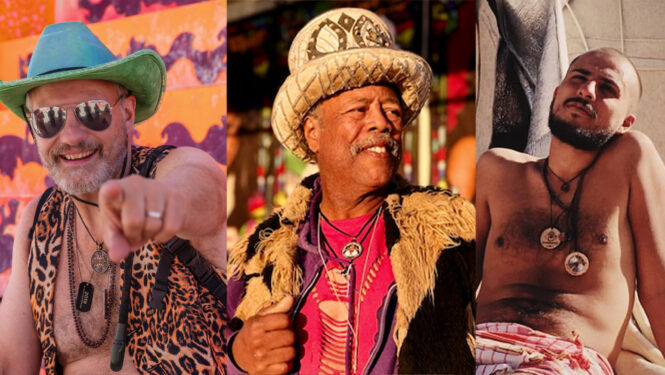
Cover image collage by Martin Rodriguez: 1. David Miles, the Godfather of Skate, at Black Rock Roller Disco, 2024 (Photo by Mark Mennie) 2. Russell Jones at “The Afterlife Reincarnate” by Blitzy and The Afterlife Artist Collective, 2025 (Photo by Mark Fromson) 3. Baybarin at the Steamology banya in Black Rock City (Photo courtesy of Sasha Baybarin)
Wow so nice to see fellow Burners who carried their inspirations from BM into their lifestyle businesses in the default world to carry on the magic in their daily lives and touch the hearts of so many others. I did the same too with the inspiration from my first Burn in 2008, founded Bonjuk Bay and community in 2015 on a beautiful bay on the Aegean coast of Turkey. Happy to share my story as well if it can be inspiration for others.
Report comment
Love how Burning Man inspires creativity in the most unexpected ways—even influencing fields like freight logistics. Truly shows the power of unconventional thinking!
Report comment
Comments are closed.